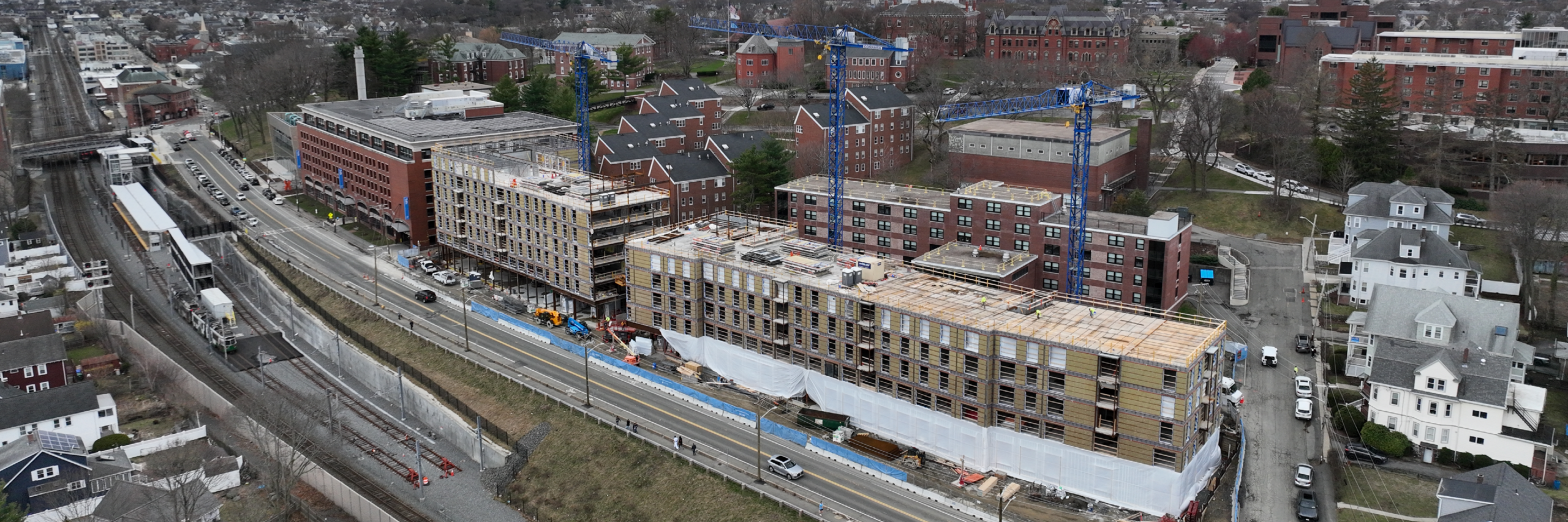
On a project like Pachyderm Place at Tufts University, two ground-up 10-story buildings on a tight urban site, steel erection is where planning, coordination, and execution are put to the test. With multiple tower cranes in operation, a non-traditional structural system, and limited room for error, success doesn’t come from reacting in the field. It comes from the decisions made long before steel ever arrives onsite.
At Erland, safety is not a layer added to construction. It’s built into how the work is planned, sequenced, and performed from day one.
On complex, vertical projects, safety planning begins in preconstruction. For Pachyderm Place, that meant identifying and addressing the highest-risk elements early: crane operations, steel erection, trade congestion, tight site logistics, and the interface with an active campus environment.
Before steel goes up, the team focuses on designing safety into the job:
- Establishing a clear crane strategy and swing zones
- Developing detailed logistics and access plans
- Sequencing steel in predictable, manageable phases
- Coordinating with trade partners early to align on expectations
Bringing safety into these early conversations reduces risk before it ever reaches the field, and ensures the project is set up for success before schedule pressures intensify.
Managing Complexity: Three Cranes, One Plan
Steel erection on this project is driven by three tower cranes operating within a constrained footprint. In this environment, efficiency and safety are directly tied to coordination.
The team operates from a single, integrated crane and logistics plan that defines:
- Lift priorities and sequencing
- Crane swing zones and exclusion areas
- Ground-level controls to prevent trade conflicts
Rather than reacting to daily conditions, the work follows a predictable rhythm. Critical lifts are planned in advance, and daily coordination meetings reinforce expectations. Communication remains clear and streamlined, one signal person, one channel, ensuring that everyone understands their role in each operation.
By eliminating uncertainty, the team avoids the kind of conflicts that can slow progress and introduce unnecessary risk.
The Hambro System: A Different Approach to Structural Safety
The use of the Hambro D500 system introduces both advantages and new considerations from a safety perspective.
One of the biggest benefits is the early installation of decking, which significantly reduces long-term exposure to open steel and fall hazards. Compared to traditional structural steel, this creates a safer working platform much earlier in the process.
However, that same benefit can create challenges if not managed properly. The presence of decking can lead to a false sense of security, particularly during leading-edge work or when guardrails and tie-off points lag behind installation.
To address this, safety measures advance at the same pace as construction:
- Immediate perimeter protection as decking is installed
- Consistent use of penetration covers
- Clear protocols during placement and concrete pours
When properly planned and executed, the Hambro system can enhance safety, but only when crews understand that the deck itself is not fall protection.
Fall Protection as a Daily Practice
On a 10-story structure, working at height is a constant reality. Fall protection is not treated as a compliance exercise—it’s part of daily execution.
Work is only performed in areas where protection is already in place, whether through:
- Guardrails
- Covered openings
- Established tie-off points
The most effective strategies are the simplest:
- Prioritizing engineered controls over administrative ones
- Planning protection in phases, aligned with construction progress
- Reinforcing clear, consistent tie-off expectations
The goal is to keep workers on protected surfaces whenever possible and limit exposure when it’s not. That level of discipline comes from planning—not just reminders.
On a project of this scale, safety culture is what ties everything together.
At Erland, that culture is visible in how the work is run every day:
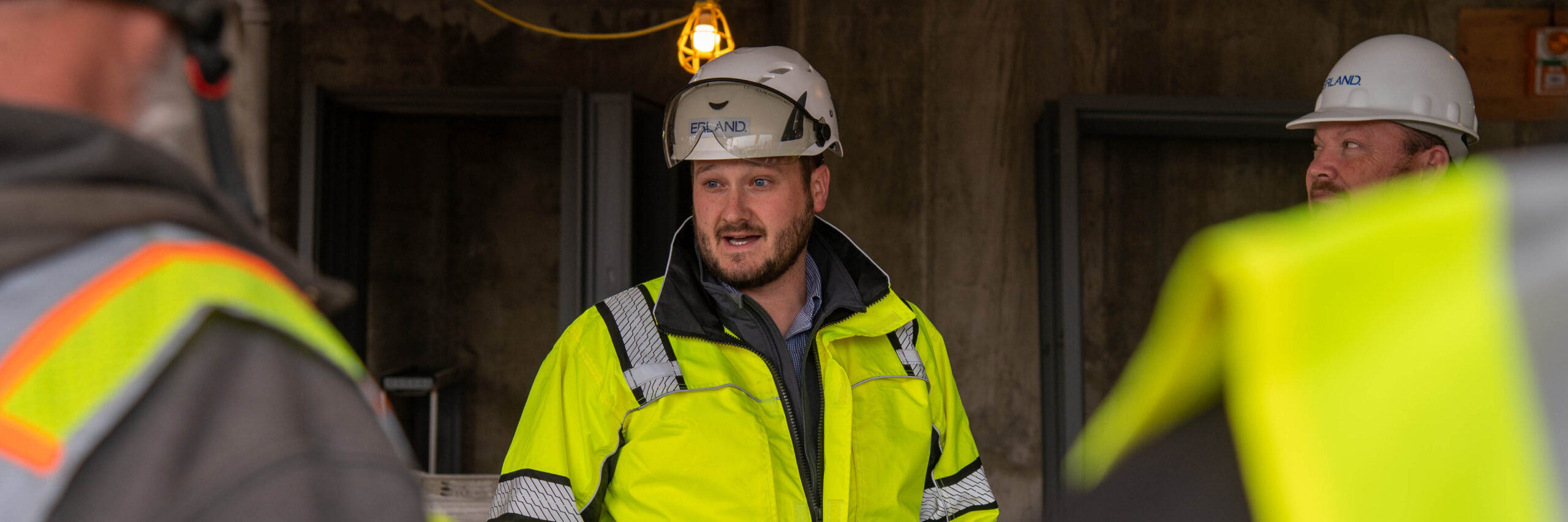
- Leadership sets the tone. Superintendents, project managers, and foremen consistently reinforce safety expectations through field huddles, coordination meetings, and site walks.
- Trades are engaged early. Crews are involved in pre-task planning, lift discussions, and sequencing conversations—helping identify risks before they become issues.
- Communication stays consistent. Regular coordination meetings and clear site communication standards ensure alignment across all teams.
- Everyone has a voice. Near misses and concerns are treated as opportunities to learn and improve, not assign blame.
This level of engagement ensures that safety is not just followed. It’s owned by everyone onsite.
Steel erection on the Pachyderm Place project is a clear example of what’s possible when coordination, planning, and safety are fully integrated. From preconstruction through execution, every decision is made with the understanding that the safest jobsite is the one that’s been thoughtfully planned from the start.
On complex projects, success isn’t defined by how issues are handled. It’s defined by how many are prevented altogether. At Erland, that’s the standard we build to.
For any questions regarding this topic, please contact Laurie Webber at lwebber@erland.com.